The bottom line
Weight redistribution toward the abdomen and muscle loss in perimenopause are driven by declining oestrogen, not a lack of discipline. Higher protein intake, resistance training, and adequate calcium and vitamin D are the most evidence-backed nutritional responses, and they set you up well for the postmenopausal years that follow, too.
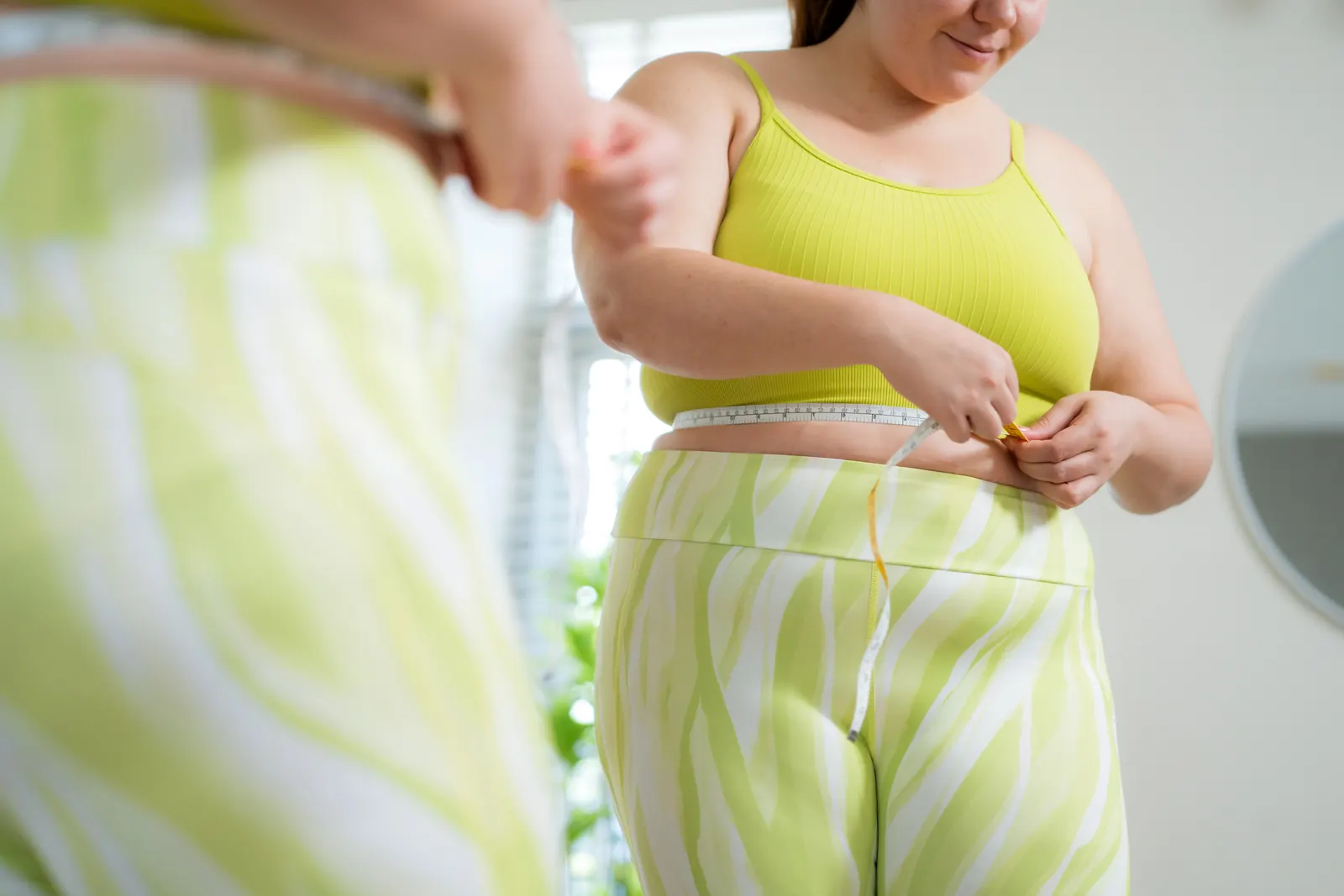
Many women notice weight redistributing toward the abdomen in perimenopause even without changes to diet or exercise.
This is a real physiological shift, driven by declining oestrogen and its effects on fat storage and muscle mass, and it is one of the most common, and most frustrating, questions we hear.
Perimenopause can start in the mid-to-late 30s or 40s and last anywhere from a few years to a decade before menopause itself.
Oestrogen doesn’t decline in a smooth line during this time. It fluctuates, sometimes wildly, before eventually settling at a much lower level.
That fluctuation is part of why symptoms can feel unpredictable.
Why fat storage shifts
Oestrogen influences where the body stores fat and how efficiently it builds and maintains muscle.
As levels decline through perimenopause, fat storage tends to shift from hips and thighs toward the abdomen. A change in distribution, not necessarily total body fat.
This visceral fat around the abdomen also behaves differently metabolically than fat stored elsewhere, which is part of why it gets particular attention in menopause research.
Protein becomes non-negotiable
As oestrogen declines, muscle mass is harder to maintain, a process sometimes called anabolic resistance.
The body needs more protein per meal to build the same amount of muscle it once did. Higher protein intake, paired with resistance training, is one of the best-supported interventions for preserving lean mass through this transition.
Spreading protein across meals (rather than saving it all for dinner) appears to help the body use it more effectively for muscle maintenance, based on current research into ageing and muscle protein synthesis.
Many guidelines now suggest 25-30g of protein per meal for women in this life stage, notably higher than general population recommendations.
Bone health moves to the foreground
Calcium and vitamin D needs increase as bone density can decline more quickly after oestrogen drops.
This is a proven area of nutrition science, not a maybe: bone loss in the years around menopause is well documented, with some research showing the fastest rate of bone loss in the first few years after periods stop. Adequate intake of both nutrients, alongside weight-bearing exercise, is consistently recommended.
Sleep, blood sugar and the knock-on effects
Perimenopause is also strongly linked with disrupted sleep, partly through hot flushes and partly through hormonal effects on sleep architecture itself.
Poor sleep, in turn, worsens insulin sensitivity and next-day appetite regulation, which can make the weight-related symptoms of perimenopause feel like they’re compounding on each other. Steadier blood sugar through balanced, fibre-rich meals can help break part of that cycle, even if it can’t fix sleep on its own.
What tends to help in practice
Beyond protein and bone-supporting nutrients, steadier blood sugar through fibre and balanced meals can ease some of the energy dips and sleep disruption common in this transition.
Alcohol and late, heavy meals are also commonly reported to worsen hot flushes and sleep quality for some people, though individual sensitivity varies widely.
None of these changes need to happen overnight, and none of them are about chasing the body you had in your 20s.
They’re about supporting the body you have now through a genuine, temporary, and eventually stabilising hormonal transition.
None of this means weight gain is inevitable or that you are doing something wrong.
It means the nutrition strategy that worked in your 20s and 30s often needs to adapt alongside your hormones.
 Expert picks: what to read next
- On a GLP-1 medication? Here's why protein matters more than ever for protecting muscle.
- Wonder why your cycle feels different lately? Here's what actually changes hormonally across the month.
Why the scale can be a misleading measure right now
Because fat and muscle are shifting in opposite directions for many women during perimenopause (fat increasing, particularly abdominally, while muscle mass declines) total body weight on a scale can stay flat or even drop slightly while body composition changes meaningfully underneath.
This is one of the more common sources of frustration and confusion during this transition: "I haven’t gained weight but nothing fits the same," is a genuinely accurate description of what’s often happening physiologically, not an exaggeration.
A closer look at the protein target
8g per kilogram of body weight) were established decades ago, largely based on preventing deficiency rather than optimising muscle maintenance in ageing adults.
6g per kilogram of body weight daily, spread across three or four meals rather than concentrated in one.
In practical terms, that might look like a palm-sized portion of protein at breakfast, lunch and dinner, rather than a small amount at breakfast and a large steak at dinner.
Plant-based protein sources (lentils, tofu, tempeh, beans) can absolutely contribute to this target, though they sometimes require slightly larger portions to match the protein content of animal sources gram for gram.
Bone health beyond calcium and vitamin D
While calcium and vitamin D get most of the attention, magnesium, vitamin K2 and adequate protein also play supporting roles in bone density maintenance.
Weight-bearing and resistance exercise remains one of the most powerful tools for bone health at this life stage: nutrition supports the process, but movement is what actually signals bone-building cells to stay active. The combination of the two is considerably more effective than either alone.
Hot flushes, mood and food triggers
Some research links caffeine, alcohol and spicy food to more frequent or intense hot flushes in some individuals, though sensitivity varies enormously from person to person.
Rather than eliminating these preemptively, tracking your own symptoms alongside intake for a few weeks tends to be more useful than following a generic elimination list that may not apply to you at all. Stable blood sugar through the day, achieved by not skipping meals and pairing carbohydrates with protein, is also commonly reported to ease mood swings and energy crashes during this transition, though it varies by individual.
What this looks like over the following years
Perimenopause typically resolves into menopause (defined as twelve consecutive months without a period) after which hormone levels stabilise at a lower, steadier baseline.
Many of the nutrition priorities discussed here (protein, calcium, vitamin D, fibre, resistance training) remain relevant well beyond that point, since postmenopausal women continue to face elevated risks for both muscle loss and bone density decline. Establishing these habits during perimenopause, rather than waiting, gives your body a head start into that next phase.
Cardiovascular health enters the picture too
Oestrogen has a protective effect on blood vessels and cholesterol levels, which is part of why cardiovascular risk factors often shift during perimenopause, including changes in LDL cholesterol and blood pressure for some people.
A nutrition pattern rich in fibre, unsaturated fats (olive oil, nuts, oily fish) and lower in ultra-processed food supports heart health during this transition, alongside the same protein and bone-focused priorities already discussed.
What about specific supplements?
Beyond calcium and vitamin D, magnesium is commonly discussed for its potential role in sleep quality and muscle function during perimenopause, though evidence specific to menopausal symptoms is still developing.
Phytoestrogens (plant compounds found in soy and flaxseed that weakly mimic oestrogen) have mixed research behind them for hot flush relief; some studies show modest benefit, others show none, and response appears to vary significantly by individual, possibly related to gut bacteria that metabolise these compounds differently person to person.
A sample day built around these priorities
A reasonable day might look like:
- A perimenopause-aware day might look like: eggs with spinach and a slice of wholegrain toast for breakfast
- a lentil and vegetable soup with a side of Greek yoghurt for lunch
- a handful of almonds and a piece of fruit mid-afternoon
- grilled fish with roasted vegetables and a small serving of quinoa for dinner, plus a calcium-rich food (yoghurt, fortified plant milk, or leafy greens) worked in somewhere across the day.
Frequently asked questions
- Do I need to eat fewer calories as I get older? Not necessarily. Metabolic rate does decline somewhat with age and with reduced muscle mass, but aggressive calorie restriction can worsen muscle loss precisely when preserving it matters most.
- Is intermittent fasting a good idea in perimenopause? Evidence is mixed and individual; some people tolerate it well, others find it worsens fatigue, mood or sleep during this transition, so it’s worth monitoring your own response rather than assuming it will work.
- Will hormone therapy change my nutrition needs? Hormone therapy can ease some symptoms, but the underlying nutrition priorities (protein, calcium, vitamin D, fibre) remain relevant regardless of whether you use it, since they address processes (muscle and bone maintenance) that hormone therapy alone doesn’t fully cover.
Perimenopause is a transition, not a decline, and the nutrition choices that support you through it are largely the same ones that support long-term strength, bone health and metabolic health for the rest of your life.
References
- El Khoudary, S. et al. Menopause transition and cardiometabolic risk. Circulation (2020).
- Maltais, M. et al. Sex hormones, muscle mass and strength. Journal of Musculoskeletal Neuronal Interactions (2009).
We check what we write against peer-reviewed research and grade the evidence as Proven, Moderate or Emerging, so you always know where the science is solid and where it is still catching up. See our evidence standards →